



ZIOVAN AM
- ENG
- မြန်မာ
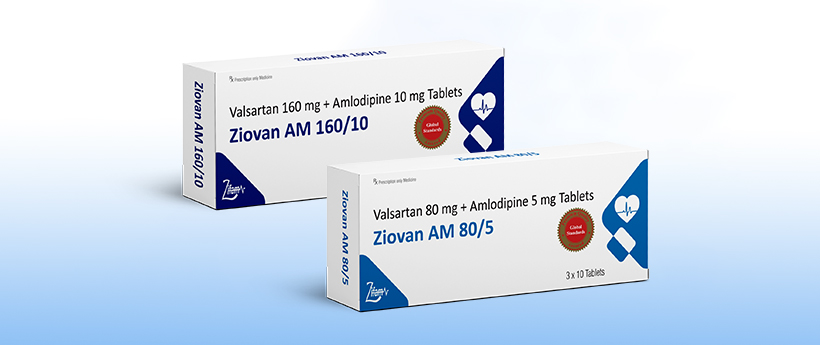
ZIOVAN AM 80/5
Composition
Each film-coated tablet contains:
Valsartan 80 mg
Amlodipine Besilate
Equivalent to Amlodipine 5 mg
ZIOVAN AM 160/10
Composition
Each film-coated tablet contains: 160 mg
Valsartan
Amlodipine Besilate
Equivalent to Amlodipine 10 mg
1. DESCRIPTION
ZIOVAN AM is a fixed combination of Valsartan and Amlodipine.
ZIOVAN AM contains the besilate salt of amlodipine, a dihydropyridine calcium-channel blocker (CCB). Amlodipine besilate is a white to pale yellow crystalline powder, slightly soluble in water and sparingly soluble in ethanol. Valsartan is a nonpeptide, orally active, and specific angiotensin I| antagonist acting on the AT1 receptor subtype. Valsartan is a white to practically white fine powder, soluble in ethanol and methanol and slightly soluble in water. ZIOVAN AM tablets are formulated in two strengths for oral administration with a combination of 80 mg, or 160 mg of valsartan with 5 mg or 10 mg of amlodipine, providing the following available combinations: 80/5 mg, 160/10 mg.
2. CLINICAL PHARMACOLOGY
2.1 Mechanism of Action
ZIOVAN AM has been shown to be effective in lowering blood pressure. Both amlodipine and valsartan lower blood pressure by reducing peripheral resistance, but calcium influx blockade and reduction of angiotensin II vasoconstriction are complementary mechanisms.
3. INDICATIONS AND USAGE
3.1 Hypertension
ZIOVAN AM is indicated for the treatment of hypertension. ZIOVAN AM may be used in patients whose blood pressure is not adequately controlled on either monotherapy.
ZIOVAN AM may also be used as initial therapy in patients who are likely to need multiple drugs to achieve their blood pressure goals.
The choice of ZIOVAN AM as initial therapy for hypertension should be based on an assessment of potential benefits and risks including whether the patient is likely to tolerate the lowest dose of ZIOVAN AM.
Patients with stage 2 hypertension (moderate or severe) are at a relatively higher risk for cardiovascular events (such as strokes, heart attacks, and heart failure), kidney failure and vision problems, so prompt treatment is clinically relevant. The decision to use a combination as initial therapy should be individualized and should be shaped by considerations such as baseline blood pressure, the target goal and the incremental likelihood of achieving goal with a combination compared to monotherapy. Individual blood pressure goals may vary based upon the patient’s risk.
4. DOSAGE AND ADMINISTRATION
4.1 General Considerations
Amlodipine is an effective treatment of hypertension in once daily doses of 2.5 mg to 10 mg while valsartan is effective in doses of 80 mg to 320 mg.
The hazards of valsartan are generally independent of doses; those of amlodipine are a mixture of dose-dependent phenomena (primarily peripheral edema) and dose-independent phenomena, the former much more common than the latter.
Most of the anti-hypertensive effects are attained within 2 weeks after initiation of therapy or a change in dose. The dosage can be increased after 1 to 2 weeks of therapy.
ZIOVANAM may be administered with or without food.
ZIOVAN may be administered with other antihypertensive agents.
Elderly patients: Because of decreased clearance of amlodipine, therapy should usually be initiated at 2.5 mg.
Renal Impairment: No initial dosage adjustment is required for patients with mild or moderate renal impairment. Titrate slowly in patients with severe renal impairment.
Hepatic Impairment: No initial dosage adjustment is required for patients with mild or moderate liver insufficiency. Titrate slowly in patients with hepatic impairment.
4.2 Add-On Therapy
A patient whose blood pressure is not adequately controlled with amlodipine (or another dihydropyridine calcium-channel blocker) alone or with valsartan (or another angiotensin II receptor blocker) alone may be switched to combination therapy with ZIOVAN AM.
A patient who experiences dose-limiting adverse reactions on either component alone may be switched to ZIOVAN AM containing a lower dose of that component in combination with the other to achieve similar blood pressure reductions.
4.3 Replacement Therapy
For convenience, patients receiving amlodipine and valsartan from separate tablets may instead wish to receive tablets of ZIOVAN AM containing the same component doses.
5. WARNINGS AND PRECAUTIONS
5.1 Fetal/ Neonatal Morbidity and Mortality
ZIOVAN AM can cause fetal harm when administered to a pregnant woman. If this drug is used during pregnancy, or if the patient becomes pregnant while taking this drug, the patient should be appreciated of the potential hazard to the fetus.
Drugs that act on the renin angiotensin system can cause fetal and neonatal morbidity and mortality when used in pregnancy. In several dozen published cases, ACE inhibitor use during the second and third trimesters of pregnancy was associated with fetal and neonatal injury, including hypotension, neonatal skull hypoplasia, anuria, reversible or irreversible renal failure, and death.
5.2 Hypotension
Excessive hypotension was seen in 0.4% of patients with uncomplicated hypertension treated with the Valsartan/Amlodipine combination in placebo-controlled studies. In patients with an activated renin-angiotensin system, such as volume-and/or salt-depleted patients receiving high doses of diuretics, symptomatic hypotension may occur in patients receiving angiotensin receptor blockers. Volume depletion should be corrected prior to administration of ZIOVAN AM. Treatment with ZIOVAN AM should start under close medical supervision.
Initiate therapy cautiously in patients with heart failure or recent myocardial infarction and in patients undergoing surgery or dialysis. Patients with heart failure or post-myocardial infarction patients given valsartan commonly have some reduction in blood pressure, but discontinuation of therapy because of continuing symptomatic hypotension usually is not necessary when dosing instructions are followed.
Since the vasodilation induced by amlodipine is gradual in onset, acute hypotension has rarely been reported after oral administration. Nonetheless, caution, as with any other peripheral vasodilator, should be exercised when administering amlodipine, particularly in patients with severe aortic stenosis.
If excessive hypotension occurs with ZIOVAN AM, the patient should be placed in a supine position and, if necessary, given an intravenous infusion of normal saline. A transient hypotensive response is not a contraindication to further treatment, which usually can be continued without difficulty once the blood pressure has stabilized.
5.3 Risk of Myocardial Infarction or Increased Angina
Rarely, patients, particularly those with severe obstructive coronary artery disease, have developed documented increased frequency, duration or severity of angina or acute myocardial infarction on starting calcium channel blocker therapy or at the time of dosage increase.
5.4 Impaired Hepatic Function
Studies with Amlodipine: Amlodipine is extensively metabolized by the liver and the plasma elimination half-life (tz) is 56 hours in patients with impaired hepatic function, therefore, caution should be exercised when administering amlodipine to patients with severe hepatic impairment.
Studies with Valsartan: As the majority of valsartan is eliminated in the bile, patients with mild-to-moderate hepatic impairment, including patients with biliary obstructive disorders, showed lower valsartan clearance (higher AUCs). Care should be exercised in administering valsartan to these patients.
5.5 Impaired Renal Function – Hypertension
In studies of ACE inhibitors in hypertensive patients with unilateral or bilateral renal artery stenosis, increases in serum creatinine or blood urea nitrogen have been reported. In a 4-day trial of valsartan in 12 hypertensive patients with unilateral renal artery stenosis, no significant increases in serum creatinine or blood urea nitrogen were observed. There has been no long-term use of valsartan in patients with unilateral or bilateral renal artery stenosis, but an effect similar to that seen with ACE inhibitors should be anticipated.
As a consequence of inhibiting the renin-angiotensin-aldosterone system, changes in renal function may occur particularly in volume depleted patients. In patients with severe heart failure whose renal function may depend on the activity of the renin-angiotensin-aldosterone system, treatment with angiotensin-converting enzyme inhibitors and angiotensin receptor antagonists has been associated with oliguria and/or progressive azotemia and (rarely) with acute renal failure and/or death. Similar outcomes have been reported with valsartan.
5.6 Congestive Heart Failure
Studies with Amlodipine: In general, calcium channel blockers should be used with caution in patients with heart failure.
Studies with Valsartan: Some patients with heart failure have developed increases in blood urea nitrogen, serum creatinine, and potassium on valsartan. These effects are usually minor and transient, and they are more likely to occur in patients with preexisting renal impairment. Dosage reduction and/or discontinuation of the diuretic and/or valsartan may be required. In the Valsartan in Acute Myocardial Infarction Trial (VALIANT), discontinuation due to various types of renal dysfunction occurred in 1.1% of valsartan-treated patients and 0.8% of captopril-treated patients. Evaluation of patients with heart failure or post-myocardial infarction should always include assessment of renal function.
6. ADVERSE REACTIONS
In placebo-controlled clinical trials, discontinuation due to side effects occurred in 1.8% of patients in the Valsartan/Amlodipine combination treated patients and 2.1% in the placebo-treated group. The most common reasons for discontinuation of therapy with Valsartan/Amlodipine combination were peripheral edema and vertigo. The adverse experiences that occurred in clinical trials (≥ 2% of patients) at a higher incidence than placebo included peripheral edema, nasopharyngitis, upper respiratory tract infection and dizziness.
7. DRUG INTERACTIONS
7.1 Drug/Drug Interactions
No drug interaction studies have been conducted with Valsartan/Amlodipine combination and other drugs, although studies have been conducted with the individual amlodipine and valsartan components, as described below:
Studies with Amlodipine: In clinical trials, amlodipine has been safely administered with thiazide diuretics, beta-blockers, angiotensin-converting enzyme inhibitors, long-acting nitrates, sublingual nitroglycerin, digoxin, warfarin, non-steroidal anti-inflammatory drugs, antibiotics, and oral hypoglycemic drugs. valsartan.
Simvastatin: Co-administration of multiple doses of 10 mg of amlodipine with 80 mg simvastatin resulted in a 77% increase in exposure to simvastatin compared to simvastatin alone. Limit the dose of simvastatin in patients on amlodipine to 20 mg daily.
Cimetidine: Co-administration of amlodipine with cimetidine did not alter the pharmacokinetics of amlodipine.
Antacid: Co-administration of the antacid Maalox with a single dose of amlodipine had no significant effect on the pharmacokinetics of amlodipine.
Sildenafil: A single 100 mg dose of sildenafil in subjects with essential hypertension had no effect on the pharmacokinetic parameters of amlodipine. When amlodipine and sildenafil were used in combination, each agent independently exerted its own blood pressure lowering effect.
Atorvastatin: Co-administration of multiple 10 mg doses of amlodipine with 80 mg of atorvastatin resulted in no significant change in the steady state pharmacokinetic parameters of atorvastatin.
Digoxin: Co-administration of amlodipine with digoxin did not change serum digoxin levels or digoxin renal clearance in normal volunteers.
Warfarin: Co-administration of amlodipine with warfarin did not change the warfarin prothrombin response time.
Studies with Valsartan: No clinically significant pharmacokinetic interactions were observed when valsartan was co-administered with amlodipine, atenolol, cimetidine, digoxin, furosemide, glyburide, hydrochlorothiazide, or indomethacin. The valsartan-atenolol combination was more antihypertensive than either component, but it did not lower the heart rate more than atenolo alone.
Warfarin: Co-administration of valsartan and warfarin did not change the pharmacokinetics of valsartan or the time-course of the anticoagulant properties of warfarin.
NSAIDs including Selective Cyclooxygenase-2 Inhibitors (COX-2 Inhibitors): In patients who are elderly, volume-depleted (including those on diuretic therapy), or with compromised renal function, co-administration of NSAIDs, including selective COX-2 inhibitors, with angiotensin Il receptor antagonists, including valsartan, may result in deterioration of renal function, including possible acute renal failure. These effects are usually reversible. Monitor renal function periodically in patients receiving valsartan and NSAID therapy.
The antihypertensive effect of angiotensin Ireceptor antagonists, including valsartan, may be attenuated by NSAIDs including selective COX-2 inhibitors.
7.2 CYP 450 Interactions
In vitro metabolism studies indicate that CYP 450 mediated drug interactions between valsartan and coadministered drugs are unlikely because of low extent of metabolism. As with other drugs that block angiotensin Il or its effects, concomitant use of potassium sparing diuretics (e.g., spironolactone, triamterene, amiloride), potassium supplements, or salt substitutes containing potassium may lead to increases in serum potassium and in heart failure patients to increases in serum creatinine.
7.3 Transporters
The results from an in vitro study with human liver tissue indicate that valsartan is a substrate of the hepatic uptake transporter
OATP1B1 and the hepatic efflux transporter MRP2. Co-administration of inhibitors of the uptake transporter (rifampin, cyclosporine) or efflux transporter (ritonavir) may increase the systemic exposure to valsartan.
8. USE IN SPECIFIC POPULATIONS
8.1 Pregnancy
Teratogenic Effects: Pregnancy Category D
ZIOVAN AM, like other drugs that act on the renin angiotensin system, can cause fetal and neonatal morbidity and death when used during the second or third trimester of pregnancy. ZIOVAN AM can cause fetal harm when administered to a pregnant woman. If this drug is used during pregnancy, or if the patient becomes pregnant while taking this drug, the patient should be apprised of the potential hazard to the fetus.
Angiotensin Il receptor antagonists, like valsartan, and angiotensin converting enzyme (ACE) inhibitors exert similar effects on the renin-angiotensin system. In several dozen published cases, ACE inhibitor use during the second and third trimesters of pregnancy was associated with fetal and neonatal injury, including hypotension, neonatal skull hypoplasia, anuria, reversible or irreversible renal failure, and death. Oligohydramnios was also reported, presumably from decreased fetal renal function. In this setting, oligohydramnios was associated with fetal limb contractures, craniofacial deformation, and hypoplastic lung development. Prematurity, intrauterine growth retardation, and patent ductus arteriosus were also reported, although it is not clear whether these occurrences were due to exposure to the drug. In a retrospective study, first trimester use of ACE inhibitors, a specific class of drugs acting on the renin angiotensin system, was associated with a potential risk of birth defects.
When pregnancy occurs in a patient using ZIOVAN AM, the physician should discontinue ZIOVAN AM treatment as soon as possible. The physician should inform the patient about potential risks to the fetus based on the time of gestational exposure to ZIOVANAM (first trimester only or later). If exposure occurs beyond the first trimester, an ultrasound examination should be done.
In rare cases when another antihypertensive agent cannot be used to treat the pregnant patient, serial ultrasound examinations should be performed to assess the intraamniotic environment. Routine fetal testing with non-stress tests, biophysical profiles, and/or contraction stress tests may be appropriate based on gestational age and standards of care in the community. If oligohydramnios occurs in these situations, individualized decisions about continuing or discontinuing ZIOVAN AM treatment and about pregnancy management should be made by the patient, her physician, and experts in the management of high-risk pregnancy.
Patients and physicians should be aware that oligohydramnios may not appear until after the fetus has sustained irreversible injury.
Infants with histories of in utero exposure to ZIOVAN AM should be closely observed for hypotension, oliguria, and hyperkalemia. If oliguria occurs, these infants may require blood pressure and renal perfusion support. Exchange transfusion or dialysis may be required to reverse hypotension and/or support decreased renal function.
Healthcare professionals who prescribe drugs acting directly on the renin angiotensin system should counsel women of childbearing potential about the risks of these agents during pregnancy.
8.2 Labor and Delivery
The effect on labor and delivery has not been studied.
8.3 Nursing Mothers
It is not known whether amlodipine is excreted in human milk. In the absence of this information, it is recommended that nursing be discontinued while amlodipine is administered.
It is not known whether valsartan is excreted in human milk.
Valsartan was excreted into the milk of lactating rats; however, animal breast milk drug levels may not accurately reflect human breast milk levels. Because many drugs are excreted into human milk and because of the potential for adverse reactions in nursing infants, a decision should be made whether to discontinue nursing or discontinue the drug, taking into account the importance of the drug to the mother.
8.4 Pediatric Use
Safety and effectiveness in pediatric patients have not been established.
8.5 Geriatric Use
In controlled clinical trials, 323(22.5%) hypertensive patients treated with Valsartan/Amlodipine combination were ≥ 65 years and 79(5.5%) were ≥ 75 years. No overall differences in the efficacy or safety of Valsartan/Amlodipine combination was observed in this patient population, but greater sensitivity of some older individuals cannot be ruled out.
Amlodipine: Clinical studies of amlodipine besilate tablets did not include sufficient numbers of subjects aged 65 and over to determine whether they respond differently from younger subjects.
Other reported clinical experience has not identified differences in responses between the elderly and younger patients. In general, dose selection for an elderly patient should be cautious, usually starting at the low end of the dosing range, reflecting the greater frequency of decreased hepatic, renal or cardiac function, and of concomitant disease or other drug therapy. Elderly patients have decreased clearance of amlodipine with a resulting increase of AUC of approximately 40-60%, and a lower initial dose may be required.
Valsartan: In the controlled clinical trials of valsartan, 1,214
(36.2%) of hypertensive patients treated with valsartan were ≥ 65 years and 265(7.9%) were ≥ 75 years. No overall difference in the efficacy or safety of valsartan was observed in this patient population, but greater sensitivity of some older individuals cannot be ruled out.
9. OVERDOSAGE
9.1 Information on Amlodipine
Single oral doses of amlodipine maleate equivalent to 40 mg/kg and 100 mg/kg amlodipine in mice and rats, respectively, caused deaths. Single oral doses equivalent to 4 or more mg/kg amlodipine in dogs (11 or more times the maximum recommended human dose on a mg/m’ basis) caused a marked peripheral vasodilation and hypotension.
Overdosage might be expected to cause excessive peripheral vasodilation with marked hypotension. In humans, experience with intentional overdosage of amlodipine is limited. Reports of intentional overdosage include a patient who ingested 250 g and was asymptomatic and was not hospitalized; another (120 mg) who was hospitalized underwent gastric lavage and remained normotensive; the third (105 mg) was hospitalized and had hypotension (90/50 mmHg) which normalized following plasma expansion. A case of accidental drug overdose has been documented in a 19-month-old male who ingested 30 mg amlodipine (about 2 mg/kg). During the emergency room presentation, vital signs were stable with no evidence of hypotension, but a heart rate of 180 bpm. Ipecac was administered 3.5 hours after ingestion and on subsequent observation (overnight) no sequelae was noted.
If massive overdose should occur, active cardiac and respiratory monitoring should be instituted. Frequent blood pressure measurements are essential. Should hypotension occur, cardiovascular support including elevation of the extremities and the judicious administration of fluids should be initiated. If hypotension remains unresponsive to these conservative measures, administration of vasopressors (such as phenylephrine) should be considered with attention to circulating volume and urine output. Intravenous calcium gluconate may help to reverse the effects of calcium entry blockade. As amlodipine is highly protein bound, hemodialysis is not likely to be of benefit.
9.2 Information on Valsartan
Limited data are available related to overdosage in humans. The most likely effect of overdose with valsartan would be peripheral vasodilation, hypotension and tachycardia; bradycardia could occur from parasympathetic (vagal) stimulation. Depressed level of consciousness, circulatory collapse and shock have been reported. If symptomatic hypotension should occur, supportive treatment should be instituted.
Valsartan is not removed from the plasma by hemodialysis.
Valsartan was without grossly observable adverse effects at single oral doses up to 2000 mg/kg in rats and up to 1000 mg/kg in marmosets, except for the salivation and diarrhea in the rat and vomiting in the marmoset at the highest dose (60 and 37 times, respectively, the maximum recommended human dose on a mg/m? basis). (Calculations assume an oral dose of 320 mg/day and a 60-kg patient.)
10. STORAGE
Store below 30°C. Protect from moisture.
KEEP MEDICINE OUT OF REACH OF CHILDREN.
11. PRESENTATION
Alu-Alu blister pack of 3×10’s in a carton along with pack insert.